CORE AND ABDOMINALS

I am sure we have all read or even been asked to engage your core and abdominals with different movements during your exercise but do we fully understand what is being asked of us when being instructed to engage your core or abdominals. Before getting started on this topic let’s get into a quick anatomy lesson to help identify what the difference is between your Core and Abdominals.

I am sure we have all read or even been asked to engage your core and abdominals with different movements during your exercise but do we fully understand what is being asked of us when being instructed to engage your core or abdominals. Before getting started on this topic let’s get into a quick anatomy lesson to help identify what the difference is between your Core and Abdominals.

Functions of Specific Muscles

The functions for each group are as follows:
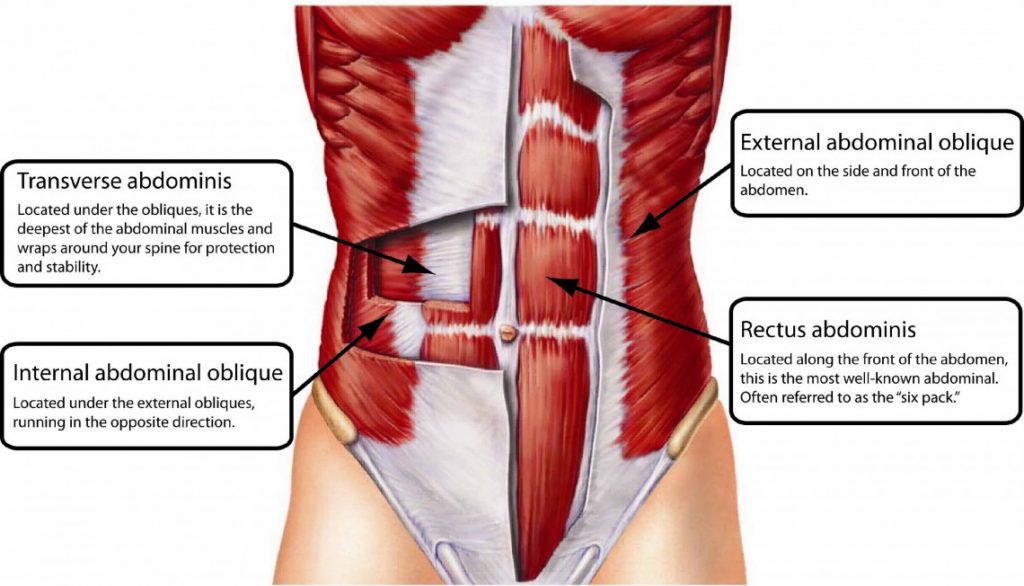
Rectus Abdominus: Flexion on the trunk
External Oblique: Rotation and side bending of the trunk
Internal oblique: Rotation and side bending of the trunk
Transverse abdominis: Provides stability to the entire area

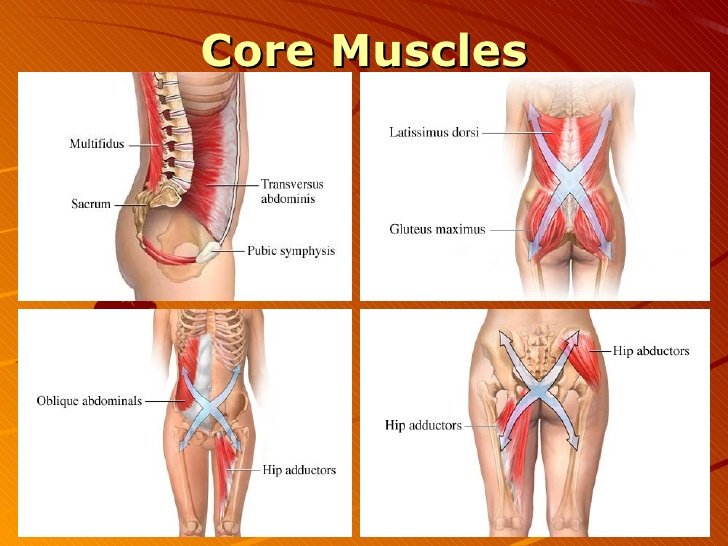
The Core musculature are all the muscles that are responsible for controlling and creating movement of the axial skeleton in the thoracic spine and lumbopelvic region (your trunk and hips in a rotation). The core is a bit different to the abdominals even though the 4 abdominal muscles are a part of the core, mostly contributing to front and side stability, but there are many more additional muscles. The primary role is to protect the spine and pelvis and the function of these muscles are to turn on in anticipation of movement. There are 3 areas that make up the rest of core which is the diaphragm (considered the ceiling, often forgotten but very important core muscle). The posterior is made up of a few but the most important is the multifidus. The pelvic floor which provides stability for the lower trunk.

What does it mean to engage your core?

Your core is engaged when all 4 sections of abdominal muscle are braced together and working with the muscles that are connected to your spine to stabilise the torso. When you know how to engage your core correctly, you will be able to stiffen your torso to support your spine whilst it bends and twists.

How to engage your core!

The simplest way to engage your core is to brace yourself as if you’re expecting a strong punch to the torso, and then breathe into your stomach. Your core engages naturally right before you laugh or cough, so if you initiate one of these actions, you’ll get an idea of how it should feel when your core is engaged.
Sucking in your stomach and holding your breath are the most common mistakes people make when told to engage their core. Truthfully, this is pretty much the exact opposite of how to engage your core correctly.
Rather than sucking your stomach in, you need to focus on pulling your navel up and in towards your spine. When you do this, your abs should feel tightened but you should still be able to move and breathe as normal.
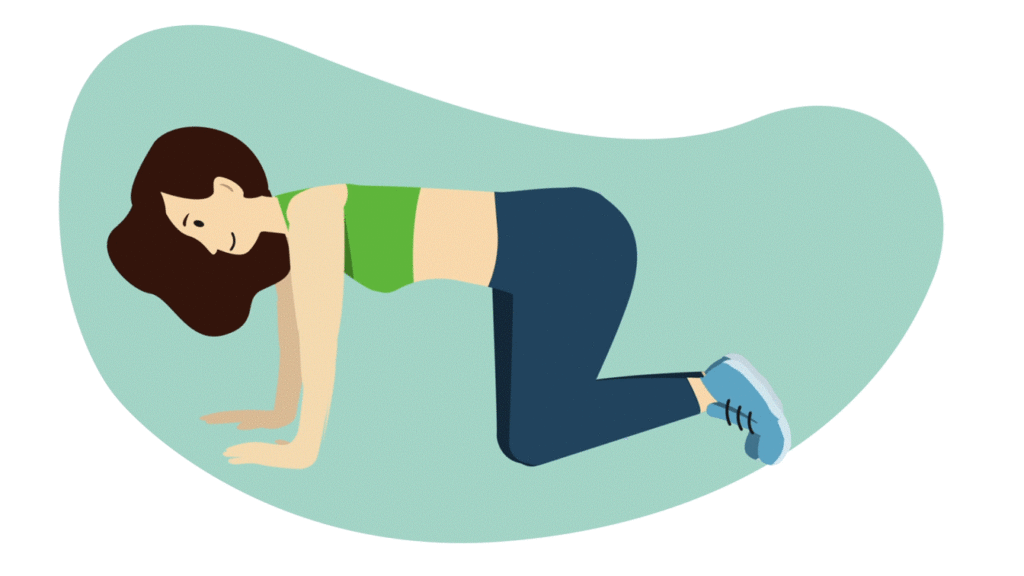
A good position for engaging your core is on all fours. In this position, pull your abs up and in towards your spine and keep your torso still whilst you exhale.

Breathing during any exercise is vital and is one of the key elements to engaging your core correctly. You cannot engage your core by holding your breath, so it’s important to keep breathing normally whilst holding your abs. If you pull your navel up and in during the exhale, the movement should naturally pull your stomach in and lift your torso.

Even though breathing is an important part to engaging your core, it is also important to breathe normally in order to support your core. Deep breathing into the belly is not appropriate if you want to engage your core in a sitting, standing position and for exercise in general including walking.

Sucking in your stomach and holding your breath are the most common mistakes people make when told to engage their core. Truthfully, this is pretty much the exact opposite of how to engage your core correctly.
Rather than sucking your stomach in, you need to focus on pulling your navel up and in towards your spine. When you do this, your abs should feel tightened but you should still be able to move and breathe as normal.
A good position for engaging your core is on all fours. In this position, pull your abs up and in towards your spine and keep your torso still whilst you exhale.
Author

Andrew Everest

Andrew is a keen fitness enthusiast and dedicates his time to helping people get to their physical and mental goals.